Algarah: A Quiet Himalayan Hamlet of Tea Gardens, Forest Trails, and Living Mountain Culture
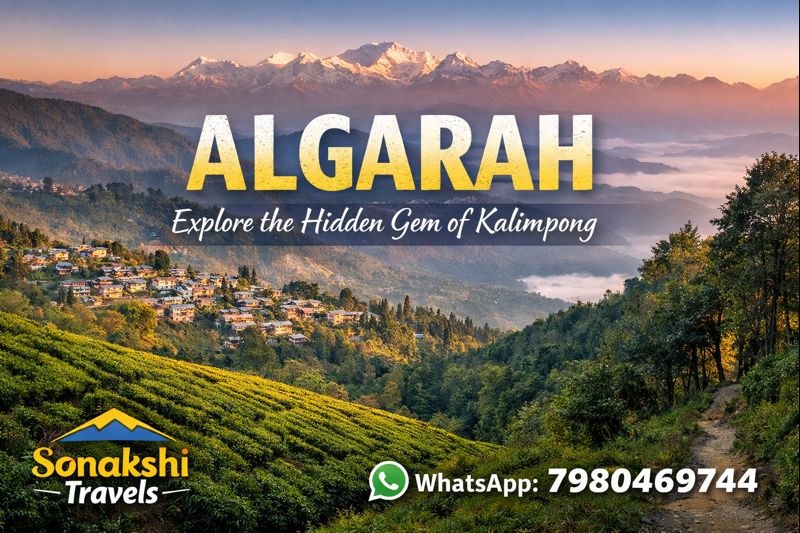
Perched on a gentle ridge between the rolling tea gardens of the eastern Himalaya and the deep forests that descend toward the Dooars plains, Algarah is a destination that rewards patience and attentiveness. This small settlement in the Kalimpong region is not designed for hurried sightseeing. Instead, it reveals itself gradually—through early-morning mist lifting from emerald slopes, the unhurried rhythm of village life, and the steady presence of the mountains that frame every horizon. Algarah remains largely absent from mass tourism itineraries, yet it holds a layered geographical, ecological, and cultural significance that makes it one of the most meaningful offbeat destinations in North Bengal.
This detailed exploration of Algarah is written from the standpoint of field observation and regional research. It aims to present Algarah not merely as a scenic stopover, but as a living landscape shaped by history, ecology, and everyday human adaptation to the mountains.
Geographical Setting and Regional Context
Algarah lies in the Kalimpong subdivision of the Kalimpong district in West Bengal, positioned at an altitude ranging roughly between 5,500 and 6,200 feet above sea level. The village occupies a transitional ecological zone where temperate Himalayan forests meet tea-growing slopes. To the north and northeast, the land rises toward higher ridges with distant views of the eastern Himalayan range, while to the south the terrain gradually descends toward the Dooars.
This geographic positioning gives Algarah a distinct climatic and ecological character. Unlike higher Himalayan villages that experience prolonged winters, Algarah enjoys a moderate mountain climate, making it accessible and habitable throughout the year. The ridge-top location allows for wide-angle views at sunrise and sunset, often revealing fleeting glimpses of snow peaks under favorable weather conditions.
Historical Evolution of Algarah
The historical narrative of Algarah is closely linked with the expansion of tea cultivation in the eastern Himalaya during the British colonial period. As tea estates developed in the surrounding regions, small settlements emerged to support plantation activity, forest management, and local trade. Algarah evolved as one such satellite village, gradually shaping its own identity through subsistence farming, seasonal labor, and forest-based livelihoods.
Unlike prominent colonial hill stations, Algarah never underwent heavy infrastructural transformation. As a result, the village retains a largely organic layout, with homes following the contours of the land rather than imposing geometric planning. This absence of colonial urbanization has allowed local traditions and vernacular architecture to persist with minimal external disruption.
Cultural Fabric and Community Life
The social landscape of Algarah is shaped primarily by Nepali-speaking hill communities, including Lepcha, Rai, Tamang, and other Himalayan ethnic groups. Community life remains deeply rooted in agriculture, seasonal cycles, and collective participation in festivals and rituals.
Homes are typically modest, constructed with local materials and designed to withstand heavy monsoon rainfall. Daily life follows the rhythm of daylight, with mornings devoted to fieldwork and afternoons often reserved for communal interaction. Visitors who spend time in Algarah quickly observe that hospitality here is understated yet sincere, reflecting a cultural emphasis on dignity and self-sufficiency.
Festivals and Oral Traditions
Local festivals such as Losar, Dasain, and Tihar are celebrated with deep cultural resonance. These events are not tourist spectacles but community-centered observances involving ritual music, shared meals, and intergenerational storytelling. Oral histories—often shared during evening gatherings—preserve memories of land, migration, and ancestral practices.
Ecological Significance and Biodiversity
Algarah’s surrounding forests form part of a fragile Himalayan ecosystem characterized by mixed broadleaf and coniferous vegetation. Oak, pine, rhododendron, and bamboo species dominate the landscape, creating habitats for a variety of birds and small mammals.
The region is particularly notable for birdlife. Seasonal migratory species join resident birds, making Algarah an excellent location for quiet bird observation. Butterflies and insects flourish during warmer months, indicating relatively healthy ecological conditions compared to more developed hill destinations.
Human–Nature Balance
One of Algarah’s defining qualities is the continued coexistence between human settlement and natural ecosystems. Agricultural practices remain largely small-scale and traditional, minimizing chemical inputs and soil disruption. Forest resources are used cautiously, guided by generational knowledge rather than commercial exploitation.
Approach Routes and Accessibility
Algarah is accessible via Kalimpong, which serves as the primary urban gateway to the region. From Kalimpong town, Algarah can be reached by road within approximately 1.5 to 2 hours, depending on weather and road conditions. The route passes through tea estates, forested stretches, and small hamlets, offering a gradual transition from urban bustle to rural calm.
The nearest major railhead is New Jalpaiguri (NJP), while Bagdogra Airport provides air connectivity. From either point, road travel via Kalimpong is the most practical approach. Travelers should note that the final stretch involves narrow mountain roads, making daylight travel preferable.
Ideal Travel Duration
Algarah is best experienced over a minimum of two nights and three days. This duration allows sufficient time for acclimatization, slow exploration, and meaningful engagement with the landscape. Longer stays of four to five days are particularly rewarding for travelers interested in walking trails, photography, or cultural immersion.
Best Time to Visit Algarah
Spring (March to May)
Spring brings clear skies, blooming vegetation, and mild temperatures. This is one of the most visually rewarding seasons, ideal for nature observation and outdoor exploration.
Monsoon (June to September)
The monsoon transforms Algarah into a lush green landscape, though frequent rainfall and occasional road disruptions require flexible planning. This season is best suited for travelers comfortable with slow travel and changing conditions.
Autumn (October to November)
Autumn offers crisp air, stable weather, and the highest chances of mountain views. It is considered the most balanced season for visiting Algarah.
Winter (December to February)
Winters are cool but not extreme. While snowfall is rare, temperatures can drop significantly at night. Clear winter mornings often produce striking light conditions.
Key Attractions and Experiences
Tea Garden Landscapes
The tea estates surrounding Algarah are integral to its identity. Walking through these plantations provides insight into the region’s agricultural heritage and labor-intensive cultivation practices.
Forest Walks and Village Trails
Short forest trails connect Algarah to neighboring settlements and viewpoints. These walks reveal subtle ecological transitions and offer quiet opportunities for reflection.
Sunrise and Atmospheric Vistas
Clear mornings often unveil layered mountain silhouettes and expansive cloud formations. Such moments define Algarah’s experiential value more than any singular landmark.
Algarah in the Broader Travel Context of West Bengal
While Algarah is geographically distant from the deltaic ecosystems of southern West Bengal, travelers exploring the state often combine mountain journeys with wetland destinations. For instance, visitors interested in contrasting landscapes sometimes extend their exploration toward the Sundarbans, a region documented extensively by platforms such as Sundarban Travel and thematic events like the Sundarban Hilsa Festival.
This contrast—from Himalayan ridges to mangrove deltas—offers a comprehensive understanding of West Bengal’s ecological diversity. Detailed resources on delta travel, including https://sundarbantravel.com/sundarban-tour/ and curated experiences such as the Sundarban Luxury Tour, help contextualize Algarah within the state’s broader geographical narrative.
Practical Insights for Thoughtful Travelers
Travelers to Algarah should approach the destination with realistic expectations. Facilities are limited, and the emphasis is on experiential depth rather than convenience. Carrying essential supplies, respecting local customs, and maintaining environmental sensitivity are crucial for a positive experience.
Mobile connectivity may be intermittent, which many visitors find enhances the sense of retreat. Responsible travel practices—such as minimizing waste and supporting local livelihoods—contribute to preserving Algarah’s character.
Why Algarah Matters
Algarah represents a form of Himalayan travel that prioritizes continuity over consumption. It is a place where landscapes, livelihoods, and traditions coexist without theatrical display. For travelers seeking to understand the mountains as lived spaces rather than scenic backdrops, Algarah offers a quietly profound experience.
In an era where many hill destinations face pressures of overdevelopment, Algarah stands as a reminder that meaningful travel often lies in places that remain content with their own pace. To walk its paths, observe its forests, and share moments with its residents is to participate—however briefly—in a resilient mountain way of life.