Indian Museum, Kolkata
– A Scholarly Journey Through Time, Civilisation, and Knowledge
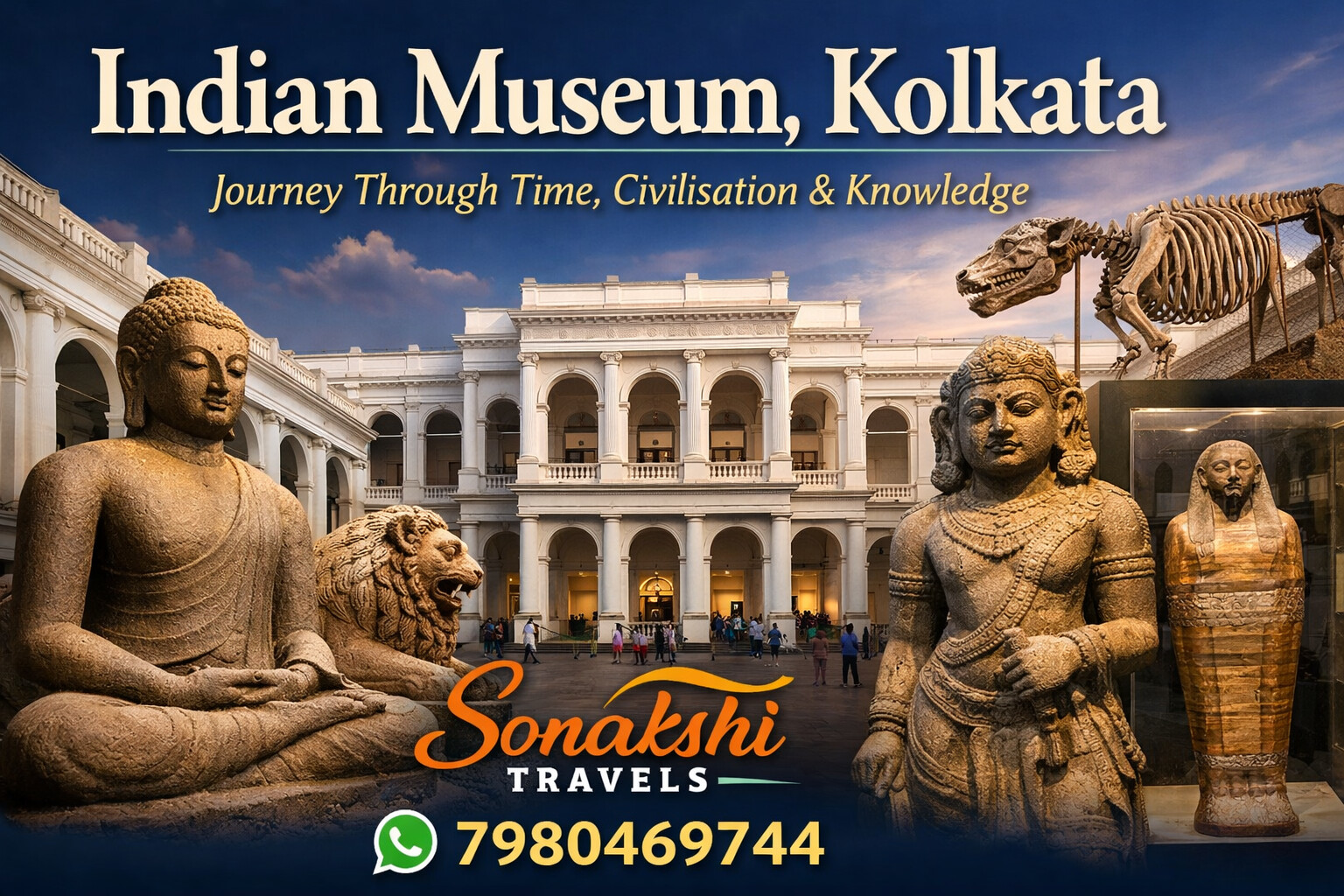
Standing with quiet authority on Jawaharlal Nehru Road in central Kolkata, the Indian Museum is not merely a building that houses artefacts; it is a monumental archive of India’s intellectual, artistic, scientific, and civilisational journey. For a traveller with an interest in history, anthropology, archaeology, art, or natural sciences, this institution offers one of the most profound cultural experiences in eastern India. Established during the early nineteenth century, the museum reflects both colonial academic ambition and the timeless depth of the Indian subcontinent’s heritage.
Unlike conventional sightseeing spots, the Indian Museum demands time, attention, and curiosity. It rewards slow exploration and reflective observation, making it a destination where history is not consumed casually but studied, contemplated, and remembered. This travel narrative presents an immersive, research-based exploration of the Indian Museum, Kolkata, structured for travellers who value knowledge-driven journeys.
Destination Overview: The Indian Museum in Context
The Indian Museum, founded in 1814, is the oldest museum in India and one of the earliest in the Asia-Pacific region. Its origins lie in the intellectual pursuits of the Asiatic Society of Bengal, an institution that played a central role in early scholarly research on Indian history, languages, and sciences. What began as a modest collection of curiosities soon evolved into a comprehensive national repository.
Today, the museum occupies a grand Italian-style building completed in 1875. Spread across multiple wings and floors, it houses over one hundred thousand objects, carefully classified into thematic galleries. These collections span archaeology, art, anthropology, zoology, geology, botany, and economic botany, offering a multidisciplinary understanding of the subcontinent and its natural environment.
The Indian Museum functions as both a public exhibition space and a research institution. Scholars from India and abroad continue to study its collections, while visitors encounter curated narratives that connect ancient civilisations with modern academic interpretation.
Historical Significance and Intellectual Legacy
The historical importance of the Indian Museum extends beyond its age. It represents the institutionalisation of knowledge during a period when India became a focal point of global academic curiosity. Early collections included manuscripts, coins, fossils, sculptures, and ethnographic objects gathered through field surveys and scholarly expeditions.
Over time, the museum contributed to the development of archaeology and anthropology as formal disciplines in India. The systematic documentation of artefacts from sites such as Mohenjo-daro, Sarnath, Bharhut, and Taxila helped shape the understanding of India’s ancient past. The museum also played a pioneering role in museology, influencing the establishment of later museums across the country.
For travellers interested in the intellectual history of India, the Indian Museum offers rare insight into how knowledge was collected, classified, and interpreted over two centuries.
Architectural Character and Spatial Layout
The museum’s architecture reflects nineteenth-century European institutional design adapted to the Indian climate. High ceilings, wide corridors, and spacious galleries were designed to accommodate large collections while ensuring ventilation and natural light. The building’s symmetrical layout aids orientation, allowing visitors to move systematically through different departments.
The central courtyard provides visual relief between galleries, while the staircases and colonnades enhance the sense of academic gravitas. Though modern conservation upgrades have been introduced, the building retains its original architectural dignity, reinforcing the experience of stepping into a historical knowledge space.
Major Galleries and Key Attractions
Archaeology Gallery
The archaeology section is widely regarded as the museum’s most significant attraction. It houses artefacts from prehistoric times to the medieval period, including stone tools, terracotta objects, sculptures, inscriptions, and architectural fragments. Highlights include relics from the Indus Valley Civilisation, Buddhist sculptures from Gandhara and Mathura, and exquisite Gupta-era art.
Particularly notable is the collection from Bharhut and Sanchi, which provides invaluable insight into early Buddhist iconography and narrative art. The gallery allows visitors to trace stylistic evolution across centuries and regions.
Art and Decorative Arts Gallery
This section showcases traditional Indian artistic expression through textiles, paintings, metalwork, woodwork, and decorative objects. Mughal miniature paintings, Rajput school artworks, and colonial-era pieces together illustrate shifts in patronage, technique, and aesthetic philosophy.
The decorative arts collection also highlights regional craftsmanship, reminding visitors that artistic heritage in India has long been rooted in everyday life as much as in royal courts.
Anthropology Gallery
The anthropology section documents the cultural diversity of India and neighbouring regions. Through life-size dioramas, tools, ornaments, musical instruments, and ritual objects, it presents the social practices of various communities, including tribal groups from eastern and northeastern India.
This gallery is particularly valuable for understanding living traditions and cultural continuity, offering perspectives often absent from mainstream historical narratives.
Natural History Galleries
The zoology and geology galleries introduce visitors to India’s rich biodiversity and geological history. Fossils, skeletal displays, mineral specimens, and preserved fauna illustrate evolutionary processes and environmental diversity across the subcontinent.
The botany and economic botany sections further explore the relationship between humans and plant resources, covering medicinal plants, agricultural crops, and forest produce.
Cultural and Educational Importance
The Indian Museum functions as an educational institution as much as a tourist destination. Its curated exhibits support academic curricula, while guided tours and lectures foster public engagement with history and science. The museum’s role in preserving tangible heritage is complemented by its contribution to cultural awareness and critical inquiry.
For residents of Kolkata, the museum has long been a place of learning, often visited during school years and revisited later with deeper appreciation. For travellers, it offers context that enriches understanding of the city’s broader cultural landscape.
Best Time to Visit the Indian Museum
The Indian Museum can be visited throughout the year; however, climatic conditions significantly influence visitor comfort. The most favourable period is from October to March, when Kolkata experiences relatively mild temperatures and lower humidity.
During summer months, particularly April to June, indoor galleries provide respite from the heat, but crowded conditions may reduce the quality of the experience. Monsoon months bring high humidity, which may affect extended exploration.
Ideal Duration for Exploration
A comprehensive visit to the Indian Museum requires at least three to four hours. Visitors with academic or research interests may prefer to allocate an entire day, allowing sufficient time for detailed observation and note-taking.
For travellers with limited time, prioritising key galleries such as archaeology and anthropology ensures a meaningful experience without fatigue.
Route, Accessibility, and Location Advantage
The Indian Museum is centrally located in Kolkata and is easily accessible by metro, bus, and taxi. The nearest metro stations are Esplanade and Park Street, both within walking distance. The museum’s location makes it convenient to combine with other cultural landmarks in the area.
Travellers exploring Kolkata as a gateway to eastern India often use the city as a base before venturing into ecological destinations such as the Sundarbans. In this broader travel context, resources like Sundarban Travel provide insights into regional exploration beyond urban heritage.
Practical Insights for Visitors
Visitors are advised to wear comfortable footwear, as extensive walking is involved. Reading descriptive panels enhances understanding, and carrying a notebook may be useful for those with academic interests. Photography rules vary by gallery, and it is essential to follow on-site instructions.
The museum environment encourages quiet observation and respectful behaviour. Weekdays are generally less crowded than weekends, offering a more contemplative atmosphere.
Integrating the Museum Visit into a Broader Travel Narrative
A visit to the Indian Museum gains deeper meaning when integrated into a wider exploration of eastern India. After engaging with the region’s historical and cultural foundations, travellers often seek ecological and experiential journeys. The transition from museum galleries to natural landscapes offers a balanced understanding of India’s heritage.
For instance, travellers interested in riverine ecosystems and cultural traditions may later explore the deltaic world through https://sundarbantravel.com/sundarban-tour/, connecting academic knowledge with lived environmental experience.
Seasonal cultural events such as the Sundarban Hilsa Festival further illustrate how history, ecology, and cuisine intersect, offering continuity between museum narratives and contemporary life.
For travellers seeking refined travel experiences after scholarly exploration, curated journeys like the Sundarban Luxury Tour demonstrate how heritage awareness enhances appreciation of responsible and immersive travel.
Why the Indian Museum Matters
The Indian Museum, Kolkata, stands as a testament to India’s enduring relationship with knowledge, preservation, and inquiry. It is not merely a repository of objects but a living archive that invites visitors to question, learn, and reflect. For the discerning traveller, it offers an experience that transcends sightseeing and enters the realm of intellectual exploration.
In an age of rapid travel and fleeting impressions, the Indian Museum encourages patience and depth. It reminds visitors that understanding a place begins with understanding its past, its people, and its natural environment. As such, the museum remains an essential destination for anyone seeking a meaningful engagement with India’s cultural and historical legacy.