Prinsep Ghat: Kolkata’s Colonial Riverside Legacy on the Hooghly
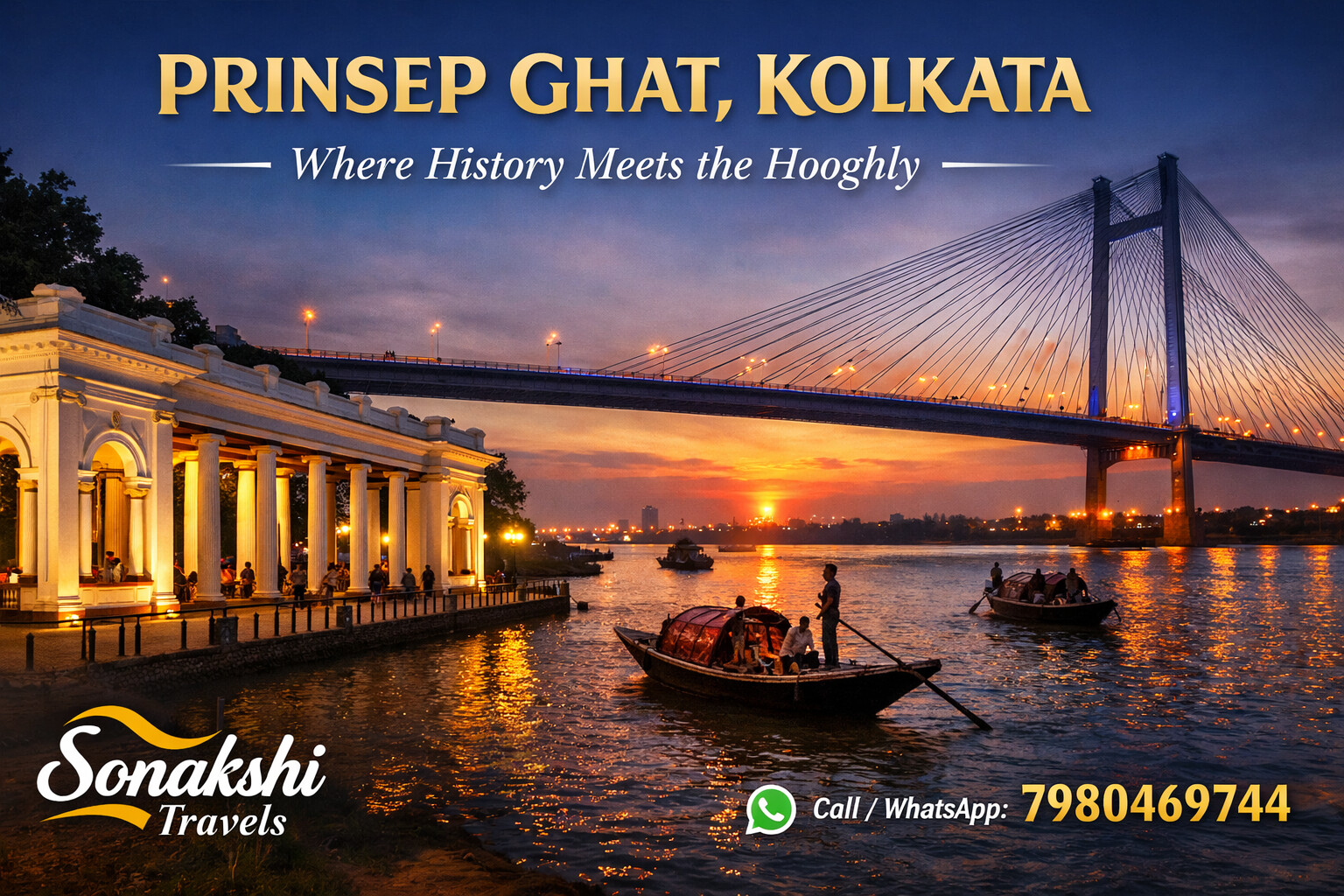
Standing gracefully along the western edge of Kolkata, Prinsep Ghat represents one of the city’s most evocative riverfront landmarks—where colonial memory, classical architecture, and everyday Bengali life intersect beside the vast Hooghly River. This riverside promenade is not merely a scenic spot; it is a layered historical space that has witnessed the evolution of Kolkata from an imperial capital to a modern cultural metropolis.
Introduction: Where the River Tells Kolkata’s Story
Prinsep Ghat unfolds slowly, much like the river it embraces. As the sun descends behind the steel arcs of Vidyasagar Setu and the water turns amber, the ghat reveals its enduring character—quiet yet deeply expressive. Unlike bustling markets or museum interiors, this site invites reflection. Locals stroll, artists sketch, couples sit in silence, and the river continues its timeless passage. To understand Prinsep Ghat is to understand Kolkata’s relationship with water, memory, and public space.
Destination Overview: Location and Setting
Prinsep Ghat is situated on the western riverbank of the Hooghly River, along Strand Road in central Kolkata. It lies between Babughat to the north and the monumental Vidyasagar Setu (Second Hooghly Bridge) to the south. Administratively, it falls within the historic core of Kolkata, close to landmarks such as Fort William, Hastings, and the Maidan.
The ghat is defined by a classical Palladian-style pavilion constructed in white stone, opening directly toward the river. The promenade stretches along the riverfront, offering uninterrupted views of river traffic, bridges, and the opposite bank of Howrah.
Historical Background: Origins of Prinsep Ghat
James Prinsep and the Colonial Vision
Prinsep Ghat was constructed in 1843 during British rule and named after James Prinsep, a distinguished scholar, antiquarian, and Assay Master of the Calcutta Mint. Prinsep is remembered for his pioneering work in deciphering ancient Brahmi and Kharosthi scripts, thereby unlocking significant chapters of Indian epigraphy.
The ghat was intended as a ceremonial landing point for British officials arriving by river, reflecting the importance of waterways in colonial administration. During the 19th century, the Hooghly was Kolkata’s principal commercial artery, connecting the city to global maritime trade routes.
Architectural Significance
The pavilion at Prinsep Ghat follows classical European design principles, marked by tall Ionic columns, symmetrical proportions, and open arcades. Its understated elegance contrasts with more ornate colonial structures, lending the ghat a restrained dignity that has allowed it to age gracefully.
Cultural and Social Importance
Over time, Prinsep Ghat transitioned from an imperial gateway to a democratic public space. Today, it functions as one of Kolkata’s most cherished leisure zones. Families gather in the evenings, students rehearse music, photographers wait for the perfect light, and joggers trace the river’s edge at dawn.
The ghat frequently appears in Bengali literature, cinema, and visual art as a symbol of nostalgia and emotional pause. Unlike manicured gardens or enclosed heritage buildings, it allows unrestricted interaction with the river, reinforcing Kolkata’s identity as a city shaped by water.
Best Time and Season to Visit
Ideal Months
The most suitable time to visit Prinsep Ghat is between October and March, when Kolkata experiences mild temperatures and low humidity. Winter evenings, in particular, provide clear skies and comfortable conditions for long walks and river views.
Time of Day
Early mornings reveal a contemplative atmosphere, with soft light reflecting off the Hooghly. However, sunset to early night remains the most popular window, when the pavilion is illuminated and the Vidyasagar Setu glows against the darkening sky.
Ideal Travel Duration
A visit to Prinsep Ghat typically requires 1.5 to 2 hours. Travelers interested in photography, river cruises, or leisurely exploration may choose to spend longer, especially during evenings.
Route and Accessibility
By Road
Prinsep Ghat is accessible via Strand Road and Lower Circular Road. Taxis, app-based cabs, and private vehicles can reach the entrance directly, though parking is limited during peak hours.
By Metro
The nearest metro station is Rabindra Sadan on the North-South Metro Line, approximately 2 kilometers away. From there, visitors may use taxis or take a pleasant walk through the Maidan.
By Train
Prinsep Ghat Railway Station on the Circular Railway line offers direct access, making it one of the few heritage ghats in India connected by suburban rail.
Key Attractions and Experiences
The Pavilion and Riverside Promenade
The white pavilion remains the focal point of Prinsep Ghat. Its open arches frame the river like a living canvas, constantly shifting with light, weather, and movement.
Hooghly River Views
From traditional ferries to modern cargo vessels, the river presents a continuous spectacle. The rhythm of the water provides an immersive sensory experience unique to Kolkata.
Vidyasagar Setu
The proximity of the iconic cable-stayed bridge adds a contemporary counterpoint to the colonial architecture, symbolizing the city’s layered history.
Boat Rides
Short river cruises are available from the ghat, offering panoramic views of both banks. These rides provide insight into Kolkata’s historic reliance on river transport.
Ecological Context: The Hooghly River System
The Hooghly River is a distributary of the Ganges and plays a crucial ecological role in the region. While urban pressures have altered its natural state, the river continues to support fisheries, birdlife, and river-based livelihoods.
For travelers interested in riverine ecosystems, experiences along the Hooghly often inspire further exploration into deltaic landscapes such as those found in the Sundarbans. Many visitors plan extended journeys through resources like https://sundarbantravel.com/sundarban-tour/, which explore the downstream continuation of this river system.
Prinsep Ghat in the Broader Kolkata Itinerary
Prinsep Ghat pairs naturally with nearby attractions such as Victoria Memorial, Fort William, and the Maidan. It also acts as a reflective pause between more intensive sightseeing segments.
Travelers researching river-centric heritage often extend their interest toward Bengal’s delta culture, using references like Sundarban Travel to understand the continuity between Kolkata’s urban riverfront and the mangrove landscapes further south.
Festivals, Events, and Cultural Moments
Although Prinsep Ghat does not host large festivals itself, it becomes particularly vibrant during city-wide celebrations such as Durga Puja and Kolkata International Film Festival evenings. The riverfront atmosphere during these periods reflects the collective rhythm of the city.
Seasonal culinary and cultural traditions tied to riverine Bengal are explored more extensively during events like the Sundarban Hilsa Festival, which celebrate the iconic river fish deeply connected to the Hooghly-Ganges system.
Practical Insights for Travelers
Safety and Etiquette
Prinsep Ghat is generally safe, particularly in the evenings when crowds are present. Visitors should exercise standard urban caution and respect the riverfront environment.
Photography Considerations
Tripods are best used during early morning hours to avoid crowd interference. Night photography benefits from the illuminated pavilion and bridge.
Environmental Responsibility
Travelers are encouraged to avoid littering and to respect ongoing efforts to maintain the riverfront. The Hooghly remains ecologically sensitive despite its urban setting.
From Prinsep Ghat to Bengal’s River Heritage
Prinsep Ghat often serves as an intellectual gateway to understanding Bengal’s broader river civilization. For travelers seeking deeper immersion, curated experiences such as the Sundarban Luxury Tour reveal how river life evolves from urban ghats to wild mangrove deltas.
A Living Riverside Chronicle
Prinsep Ghat endures not because it has remained unchanged, but because it has adapted—absorbing new meanings while preserving its essence. It is a place where architecture frames nature, history coexists with leisure, and the river continues its quiet dialogue with the city.
For the thoughtful traveler, Prinsep Ghat is not merely a stop on an itinerary. It is an invitation to pause, observe, and understand Kolkata through the slow, reflective movement of the Hooghly River.