Takdah: A Colonial Hill Hamlet of Forests, Tea, and Forgotten Silence
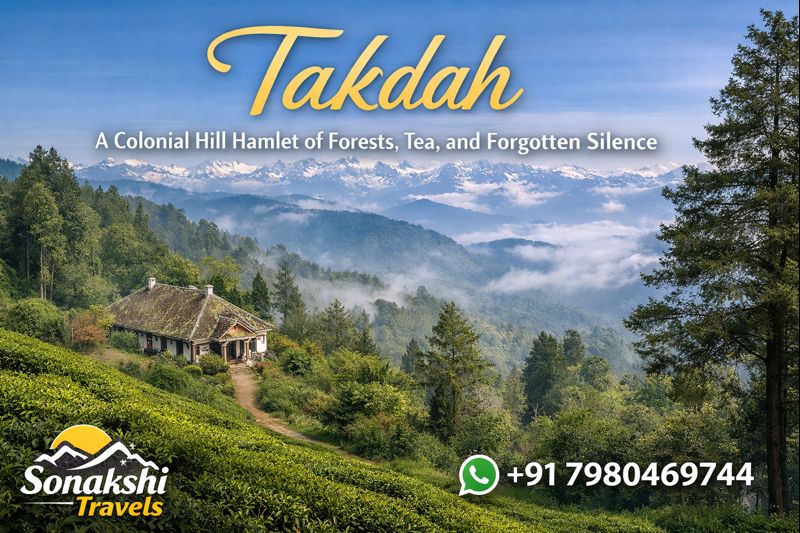
Takdah is not a destination that announces itself loudly. It reveals itself slowly, through mist-laced forests, winding mountain roads, and the quiet discipline of old cantonment settlements. Located in the eastern Himalayan foothills of Darjeeling district, Takdah stands apart from mainstream hill stations by preserving an atmosphere shaped equally by nature, colonial legacy, and rural Himalayan life. This is a place where the hills still breathe at their own pace, unhurried by crowds or commercial urgency.
For the serious traveler, Takdah offers something increasingly rare in the Eastern Himalayas: an unbroken continuity between landscape, history, and daily life. Tea gardens flow uninterrupted into forest belts, British-era bungalows sit quietly among moss-covered trees, and village paths still serve more pedestrians than vehicles. Takdah is best approached not as a sightseeing checklist, but as a living geography to be observed, understood, and absorbed.
Destination Overview: Where Takdah Truly Stands
Takdah is situated at an altitude of approximately 4,000 feet above sea level, positioned between Darjeeling town and Kalimpong. Historically developed as a British cantonment and administrative outpost, its layout reflects careful planning rather than organic hill sprawl. Broad roads, regimented forest cover, and zoned settlements continue to define the region.
The name “Takdah” is believed to have originated from the Lepcha word “Tukdah,” meaning mist or fog, a fitting description given the area’s frequent cloud cover and cool, moisture-rich climate. Unlike Darjeeling, Takdah does not revolve around tourism infrastructure. Its economy is still largely driven by tea estates, forest services, and small-scale agriculture.
This relative economic independence has allowed Takdah to retain its low-density character. The absence of aggressive commercialization makes it particularly appealing to travelers seeking environmental authenticity and spatial calm rather than entertainment-driven travel experiences.
Historical Context and Colonial Imprint
Takdah’s modern history begins in the late nineteenth century when the British established it as a cantonment and military storage center. Its strategic location allowed efficient movement between Darjeeling, Kalimpong, and the plains of Bengal. Several colonial bungalows, forest lodges, and officers’ residences were constructed during this period, many of which still exist today in varying states of preservation.
The surrounding tea estates—notably Rungli Rungliot, Tinchuley-adjacent gardens, and other smaller plantations—were developed during the same era. Tea cultivation shaped both the physical terrain and the socio-economic structure of the region, introducing plantation settlements that coexist alongside indigenous Lepcha and Nepali villages.
Takdah’s cantonment status also contributed to its unusually dense forest cover. Military planning emphasized environmental stability, resulting in extensive afforestation with pine, cedar, and cryptomeria species that continue to dominate the landscape.
Natural Landscape and Ecological Setting
Ecologically, Takdah lies within a sensitive transition zone between temperate Himalayan forests and subtropical lower hill ecosystems. This positioning allows a remarkable diversity of flora and fauna. Large stretches of undisturbed forest serve as corridors for birds, small mammals, and endemic plant species.
Birdlife is particularly abundant, with frequent sightings of flycatchers, sunbirds, barbets, and raptors. During early mornings, forest trails resonate with layered bird calls, creating a soundscape that defines the Takdah experience more than any visual landmark.
Seasonal orchids, ferns, and mosses thrive due to consistent humidity. Unlike manicured hill gardens, Takdah’s vegetation grows organically, contributing to an atmosphere that feels both primeval and serene.
Best Time to Visit Takdah
Spring (March to April)
Spring is ideal for travelers interested in forest walks and botanical observation. Temperatures remain moderate, visibility improves, and flowering plants add subtle color to the otherwise green-dominated landscape.
Summer (May to June)
Summers in Takdah are cooler than the plains, making this season suitable for extended stays. Occasional rain enhances forest freshness without significantly disrupting travel plans.
Monsoon (July to September)
The monsoon transforms Takdah into a lush, rain-drenched ecosystem. While landslides and fog may affect accessibility, this period offers unmatched atmospheric depth for experienced travelers comfortable with limited mobility.
Autumn and Early Winter (October to December)
Clear skies, crisp air, and distant mountain views define this season. It is the most balanced time for photography, walking trails, and cultural exploration.
Ideal Travel Duration
Takdah is best experienced over two to three nights. Shorter visits limit exploration to surface-level impressions, while longer stays allow immersion into forest rhythms, village life, and the slow unfolding of weather patterns that define the region.
Route and Accessibility
Takdah is accessible by road from both Darjeeling and Kalimpong. The nearest major railway station is New Jalpaiguri, and the closest airport is Bagdogra. From the plains, travelers typically proceed via Teesta Valley routes, gradually ascending through tea estates and forest belts.
Road conditions are generally stable, though narrow in certain stretches. Private vehicles are preferable for flexibility, particularly for exploring nearby hamlets and forest points.
Key Attractions and Experiences
Takdah Cantonment Area
The old cantonment zone remains the spatial and historical heart of Takdah. Tree-lined roads, abandoned barracks, and colonial-era structures evoke a restrained architectural elegance rooted in functionality rather than ornamentation.
Tea Estate Walks
Walking through surrounding tea gardens offers insight into plantation life, seasonal rhythms, and labor patterns that continue largely unchanged for decades. These walks are best undertaken early in the morning.
Forest Trails and Birdwatching
Takdah’s forest paths are informal yet deeply rewarding. Without marked tourist routes, exploration requires attentiveness and respect for local guidance, reinforcing the region’s non-commercial character.
Nearby Villages
Short excursions to neighboring settlements reveal traditional Himalayan lifestyles shaped by agriculture, forest resources, and inter-community cooperation.
Cultural and Social Landscape
Takdah’s population primarily consists of Nepali-speaking communities alongside smaller Lepcha groups. Daily life revolves around tea work, forest management, and subsistence farming. Festivals are observed quietly, emphasizing communal participation rather than spectacle.
Hospitality in Takdah is understated yet sincere. Conversations often unfold gradually, reflecting a cultural preference for familiarity over formality.
Practical Insights for Travelers
Takdah does not cater to nightlife, shopping, or packaged entertainment. Travelers should arrive prepared for limited amenities, irregular connectivity, and early evenings shaped by natural light cycles.
Walking shoes, weather-appropriate clothing, and personal reading or writing material enhance the experience. This is a destination that rewards patience and attentiveness rather than activity accumulation.
For travelers exploring eastern India holistically, Takdah pairs well with journeys to forested delta landscapes such as those described in https://sundarbantravel.com/sundarban-tour/, offering a contrasting ecological narrative within the same state.
Broader regional planning resources like Sundarban Travel also contextualize how hill and delta ecosystems coexist within West Bengal’s geographic diversity.
Cultural festivals rooted in riverine traditions, including the Sundarban Hilsa Festival, highlight the state’s varied ecological identities, enriching understanding beyond a single landscape.
For travelers inclined toward premium nature-based experiences, comparative perspectives such as Sundarban Luxury Tour illustrate how different environments demand different travel philosophies.
Closing Perspective
Takdah does not attempt to impress. It simply exists, quietly maintaining a balance between human presence and natural order. For travelers willing to slow down, observe, and listen, Takdah offers a rare opportunity to experience the Eastern Himalayas as a lived environment rather than a curated destination. Its value lies not in what it shows, but in what it allows one to feel over time.