Plassey: Where a Quiet Riverside Village Changed the Destiny of India
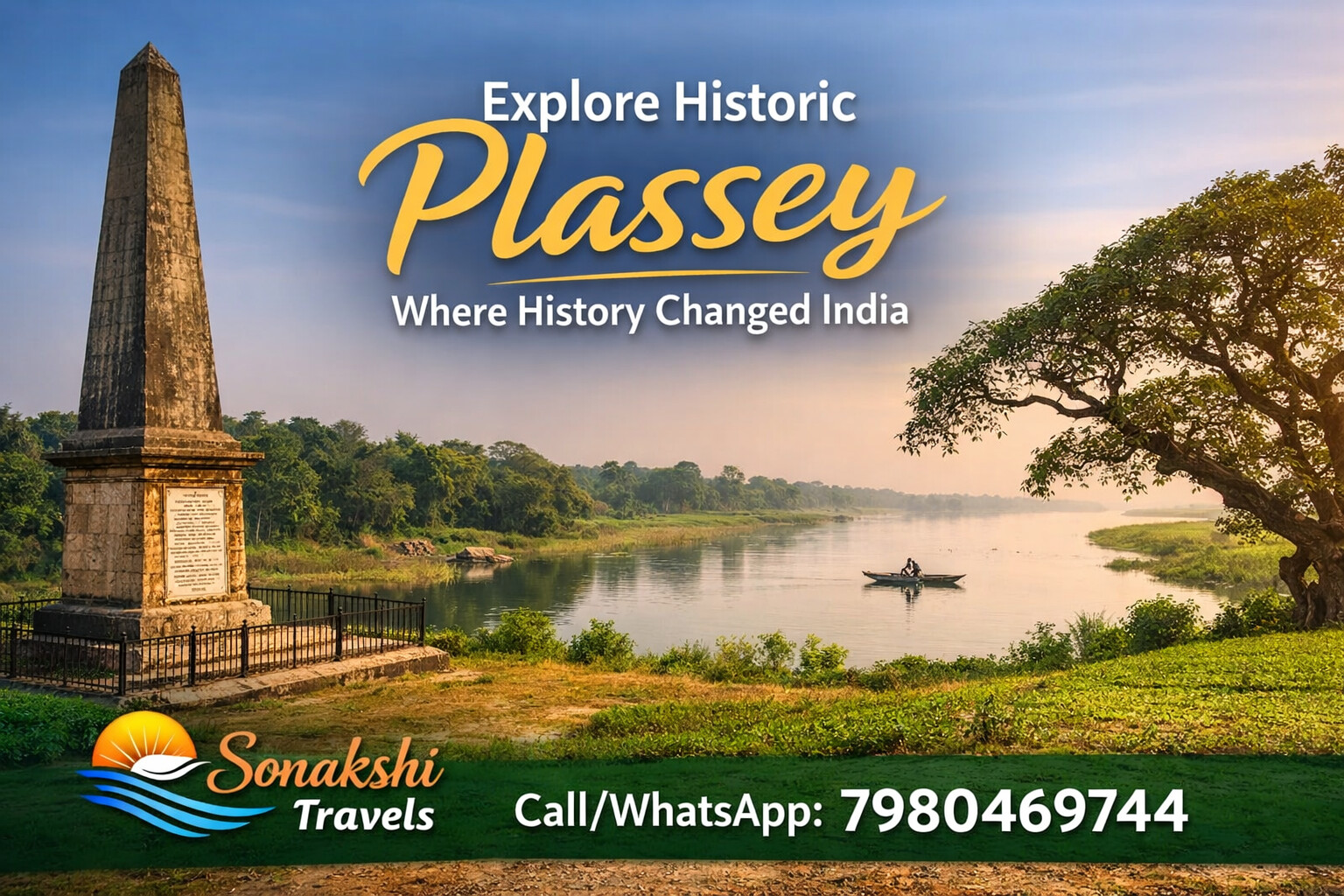
Plassey, a seemingly tranquil riverside settlement in the Nadia district of West Bengal, occupies a place of profound importance in the historical geography of India. To the untrained eye, it may appear as just another rural landscape dotted with mango groves, ancient trees, and the slow-flowing Bhagirathi River. Yet beneath this pastoral calm lies the memory of an event that reshaped the political, economic, and administrative structure of the Indian subcontinent. The Battle of Plassey, fought in 1757, marked a decisive turning point that ushered in nearly two centuries of colonial rule.
This article approaches Plassey not merely as a historical footnote, but as a living landscape—one that blends history, ecology, rural life, and quiet reflection. Drawing from field exploration, archival sources, and regional travel research, this guide presents Plassey as a destination worthy of thoughtful travel rather than hurried sightseeing.
Destination Overview: Understanding Plassey Beyond the Textbooks
Plassey is located approximately 45 kilometers north of Kolkata, within the Nadia district of West Bengal. The village sits on the eastern bank of the Bhagirathi River, a distributary of the Ganga that has historically served as a vital artery for trade, agriculture, and communication. The surrounding region is characterized by fertile alluvial plains, lush farmlands, and scattered remnants of colonial-era infrastructure.
What distinguishes Plassey from many historical sites is the absence of overt commercialization. There are no sprawling theme parks or artificial reconstructions. Instead, visitors encounter original terrain, aged trees believed to be witnesses to history, and memorial structures that speak quietly rather than theatrically. This authenticity allows Plassey to function as both a historical site and a contemplative space.
Historical Significance: The Battle That Changed India
The Political Climate of 18th Century Bengal
By the mid-18th century, Bengal was one of the richest provinces in the Indian subcontinent. Its thriving textile industry, fertile agricultural base, and strategic river networks made it a focal point for European trading companies. The Nawabs of Bengal governed the region with relative autonomy under the weakening Mughal Empire.
The British East India Company, initially established as a trading enterprise, had begun to interfere increasingly in regional politics. Tensions between the Nawab Siraj-ud-Daulah and the Company escalated due to trade disputes, unauthorized fortifications, and political manipulation.
The Battle of Plassey (1757)
The Battle of Plassey was fought on June 23, 1757, between the forces of Siraj-ud-Daulah and the British East India Company led by Robert Clive. Despite having a numerically superior army, the Nawab was betrayed by key generals, most notably Mir Jafar. The battle itself was brief, but its consequences were immense.
The British victory paved the way for Company rule in Bengal, which later expanded across India. Plassey thus represents not merely a military engagement, but the beginning of systematic colonial governance, revenue extraction, and political domination.
Key Attractions and Landmarks in Plassey
Plassey Memorial Obelisk
The most prominent landmark in Plassey is the memorial obelisk erected in 1799 by the British to commemorate their victory. Standing within a manicured compound, the obelisk lists the names of British officers who died in the battle. Its restrained design contrasts with the magnitude of the historical shift it symbolizes.
Siraj-ud-Daulah’s Mango Grove
Local tradition holds that parts of the battlefield were once covered by dense mango orchards. Some of these ancient trees still survive, offering shade and a tangible link to the past. Walking through these groves allows visitors to visualize troop movements and camp locations described in historical records.
Bhagirathi Riverbank
The riverbank near Plassey is integral to understanding the battle’s logistics. The Bhagirathi served as a supply route and strategic barrier. Today, the riverbank offers serene views, particularly during early morning and late afternoon, when fishermen and farmers go about their daily routines.
Ecological and Rural Landscape
Beyond its historical relevance, Plassey lies within a rich agrarian ecosystem. The fertile soil supports paddy cultivation, jute farming, and seasonal vegetables. Birdlife is abundant, particularly near the river and wetlands, making the area quietly appealing to nature observers.
The absence of heavy industry has preserved the rural character of the region. Seasonal changes are distinctly visible—lush greens during the monsoon, golden fields in winter, and a subdued palette during the summer months.
Tour Planning Guide for Plassey
Best Time to Visit
The ideal time to visit Plassey is between November and February. During these months, the weather remains mild, with daytime temperatures ranging between 15°C and 25°C. This period is suitable for walking tours and extended exploration of outdoor sites.
The monsoon season (June to September) brings heavy rainfall, which enhances the greenery but can make access routes muddy and riverbanks slippery. Summer months are generally hot and humid, reducing overall comfort.
Ideal Duration of Stay
Plassey can be explored comfortably as a half-day or full-day excursion. However, travelers with a deeper interest in history and rural Bengal may consider combining Plassey with nearby destinations in Nadia district for a two-day itinerary.
Route and Accessibility
Plassey is accessible from Kolkata via both road and rail. The nearest railway station is Plassey Station on the Sealdah–Lalgola line. From the station, local transport is available to reach the memorial area.
By road, Plassey can be reached via NH-12, with a driving time of approximately two hours from central Kolkata, depending on traffic conditions.
Cultural Context and Local Life
Plassey’s residents are primarily engaged in agriculture and small-scale trade. The local culture reflects typical rural Bengal traditions, with seasonal festivals, river-centric livelihoods, and a strong sense of community. Visitors are advised to approach interactions with cultural sensitivity and respect for local customs.
The site also holds educational importance, frequently visited by students and researchers studying colonial history. This academic association has helped preserve the site’s dignity and historical focus.
Plassey in a Broader Travel Context
For travelers exploring eastern India, Plassey fits well into a larger historical and ecological circuit. Many visitors combine a visit here with riverine landscapes and delta regions further south. Those interested in understanding Bengal’s transformation under colonial rule often extend their journey toward the Sundarbans, where colonial trade routes once intersected with natural frontiers.
In this context, travelers often plan longer itineraries that include experiences such as the
Sundarban Tour Package, which offers insight into the region’s ecological resilience, or a shorter
Sundarban 1 Day Tour for those with limited time.
Cultural events like the
Sundarban Hilsa Festival 2026 further highlight how history, ecology, and culinary traditions intersect in Bengal’s deltaic regions.
For travelers seeking a more refined and personalized exploration of these landscapes, options such as a
Sundarban Luxury Tour provide comfort without detaching from the region’s natural and historical depth.
Practical Insights for Travelers
Visitors to Plassey should carry sufficient water, sun protection, and walking shoes suitable for uneven terrain. As facilities near the memorial are limited, it is advisable to plan logistics in advance.
Photography is permitted in most areas, but care should be taken to respect local residents and avoid intrusive behavior. Littering is strongly discouraged, as waste management infrastructure in rural areas is minimal.
Why Plassey Still Matters
Plassey is not a destination that overwhelms with spectacle. Instead, it invites quiet reflection on the forces that shaped modern India. Standing on the same ground where alliances were broken and empires redirected, visitors gain a deeper appreciation of how history unfolds in ordinary landscapes.
For the thoughtful traveler, Plassey offers more than a lesson from the past—it provides context, continuity, and a rare opportunity to experience history where it actually happened.